Project Details
Building Soil Health Programme – Phase II (January–June 2026)
The Building Soil Health (BSH) Programme Phase II was implemented by Global Agricultural Extension and Rural Services (GAERS) with the support of the Rapunzel Foundation to address key challenges facing smallholder farmers in northwestern Nigeria, including declining soil fertility, climate change, rising agricultural input costs, and limited access to practical extension and climate adaptation services.
Building on the experiences and lessons learned during Phase I, the programme adopted a holistic approach that combined soil health restoration, climate resilience, farmer innovation, circular economy principles, and digital extension services. The objective was not only to improve agricultural productivity but also to strengthen farmer resilience and create sustainable livelihood opportunities.
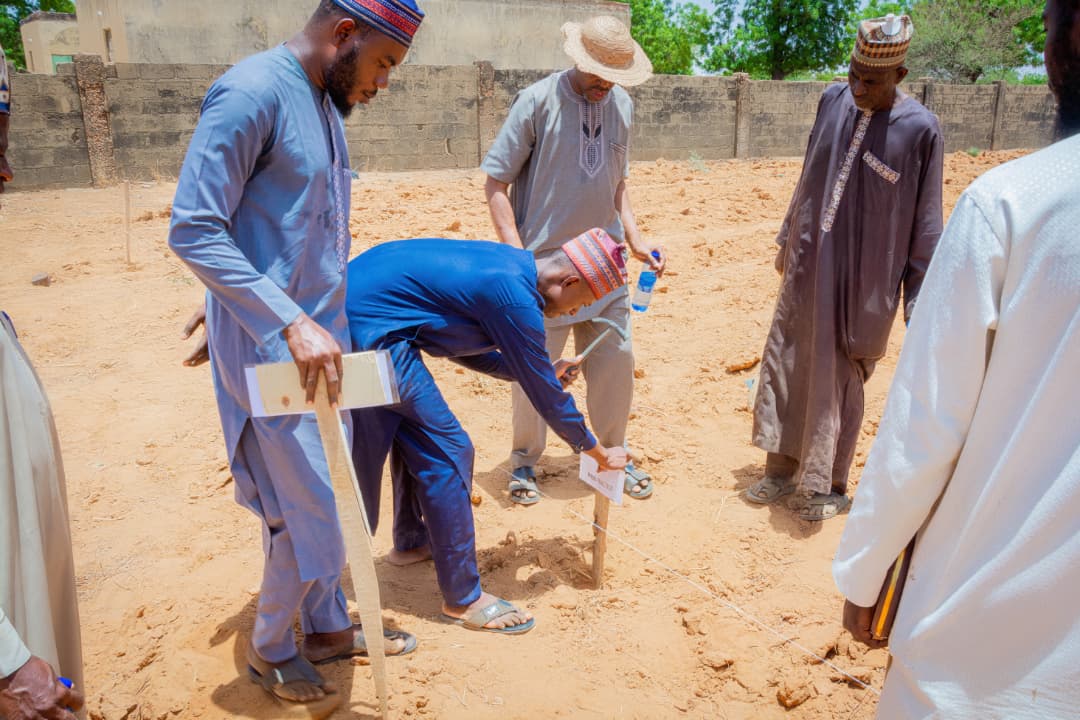
A major achievement of the programme was the establishment of the GAERS Demonstration Farm and Learning Facility in Sokoto State, which serves as a practical platform for demonstration, experimentation, farmer training, and innovation. The facility was designed to showcase affordable and locally adaptable approaches to sustainable agriculture that can be implemented by smallholder farmers and rural communities.
The programme implemented a blended learning approach, combining virtual Training of Trainers (ToT) sessions with practical field demonstrations and digital advisory services. The programme trained 25 Master Trainers and supported 25 farmers through practical learning, peer exchange, and community-based innovation.
International and local experts contributed knowledge and practical experiences across a wide range of thematic areas. Mr. Pradeep Ghosh (OASiS GLIDE) introduced participants to livelihood development approaches through his session "Design Your Own Livelihoods on What You Have, Not What You Don't", highlighting the importance of building sustainable livelihoods using locally available resources. Mr. Ashok Mathur (Root Feast Method - RFM) facilitated sessions on low-water tree establishment, landscape restoration, and livelihood opportunities through the Root Feast Method. Dr. Santosh Chavan (Yeranda FarmLab) delivered practical training on soil biology, microbial fertilizers, composting, bio-input production, and strategies for reducing dependence on chemical agricultural inputs. Mr. Ravindra Adusumilli and Mr. Sandeep CS (WASSAN) introduced participants to Pre-Monsoon Dry Sowing (PMDS), dry sowing systems, and soil moisture management techniques for climate-resilient agriculture.
Practical demonstrations established during the programme included compost production systems, liquid bio-input preparation, microbial soil solutions, agroforestry and tree establishment, mulching and soil cover management, water conservation practices, climate-smart agriculture, and circular economy approaches that transform locally available resources into valuable agricultural inputs.
The project also demonstrated the value of combining digital and physical extension approaches. WhatsApp advisory groups and online learning platforms facilitated communication, knowledge exchange, and continuous engagement, while field demonstrations enabled farmers to observe, test, and adapt innovations under real farming conditions.
An important lesson from the programme was the recognition that farmers engage with learning opportunities in different ways. While some participants were highly active in digital discussions, others demonstrated stronger commitment through practical implementation and field activities. This reinforced the importance of providing multiple pathways for learning, participation, and knowledge exchange.
The programme further highlighted the significant potential of circular economy approaches in smallholder farming systems. Demonstrations involving compost production, bio-input preparation, agricultural waste recycling, and local resource utilization showed that many agricultural challenges can be addressed using resources already available within farming communities. These approaches have the potential not only to improve soil health and climate resilience but also to create new livelihood opportunities and rural enterprises.
The implementation of the Building Soil Health Programme has laid the foundation for a broader vision. Following the completion of Phase II, GAERS is preparing for the formal commissioning of the Demonstration Farm and Learning Facility as a Regional Climate Resilience and Soil Health Innovation Hub. The long-term objective is to develop a scalable and replicable ecosystem that integrates soil health restoration, climate adaptation, farmer innovation, digital extension, circular economy approaches, and sustainable rural entrepreneurship.
The experience gained through the programme confirms that some of the most promising solutions for sustainable agriculture may not come from introducing entirely new resources, but rather from helping farmers recognize, organize, and derive greater value from the resources, knowledge, and innovations that already exist within their communities.
Project Duration
January – June 2026
Geographic Focus
Sokoto State, Nigeria
Funding Partner
Rapunzel Foundation
Implementing Organization
Global Agricultural Extension and Rural Services (GAERS)